Gestational diabetes: everything you need to know

Gestational diabetes: everything you need to know
Gestational diabetes is a form of diabetes that develops during pregnancy [1]. However, since the condition does not usually cause any noticeable symptoms, many mothers will often be surprised or concerned when they discover they have developed it [2].
While this can feel worrying, it’s worth knowing that the vast majority of mothers with gestational diabetes will go on to have perfectly healthy babies [2]. As a manageable condition, gestational diabetes can be improved by making a few simple dietary changes and exercising on a regular basis [2].
Keep reading to find out more about gestational diabetes, including what it is, how it might affect your pregnancy and which lifestyle changes can help ensure both you and your baby stay healthy throughout your pregnancy.
What is gestational diabetes?
Defined as any form of hyperglycaemia (high blood glucose) that develops for the first time during pregnancy [1], gestational diabetes is one of the three main types of diabetes — alongside type 1 diabetes and type 2 diabetes [3].
Unlike type 1 diabetes, where the body is unable to produce enough insulin (an essential hormone which regulates our blood glucose levels) because of a problem with the immune system [3], during gestational diabetes, your body can produce insulin. However, it can’t be used effectively due to a problem called insulin resistance, which makes it hard for the body to use insulin as it should [4]. This issue is also associated with type 2 diabetes [3].
Gestational diabetes can also start when the body isn’t able to make and use all the insulin it needs for pregnancy [4]. Without enough insulin, glucose (which our body uses for energy) builds up in the blood, causing high blood glucose levels [4].
Gestational diabetes usually goes away after pregnancy [5].
How common is gestational diabetes?
We don’t know exactly how common gestational diabetes is [1], but we do know that millions of women across the world are affected by the condition [4].
We also know that the condition is much more prevalent in some countries than others [1]. In Sweden, for example, less than 2% of women have gestational diabetes [1]. In Canada, however, almost 18% of women are thought to have it [1].
Causes of gestational diabetes
The exact cause of gestational diabetes is not yet entirely clear [4]. But, researchers have discovered that it has something to do with the hormones involved in pregnancy [4], especially those associated with the placenta, which supports the baby as it grows [4].
The placenta is associated with certain hormones that raise blood glucose levels or cause insulin resistance [2, 6]. During gestational diabetes, it is thought that these hormones block the action of the mother’s insulin and make it hard for the mother’s body to use insulin [4].
Gestational diabetes can also occur when the mother’s body isn’t able to make and use all the insulin it needs for pregnancy [4].
Symptoms of gestational diabetes
Although gestational diabetes doesn't normally cause any symptoms [2], if the levels of blood glucose spike too much, this may cause symptoms similar to other forms of diabetes. This may include [2]:
- Tiredness
- Physical weakness or fatigue
- Increased levels of thirst
However, since these symptoms are generally mild, they can easily be missed. That’s why the best way to diagnose gestational diabetes is by using a glucose tolerance test [2].
How gestational diabetes can affect your pregnancy
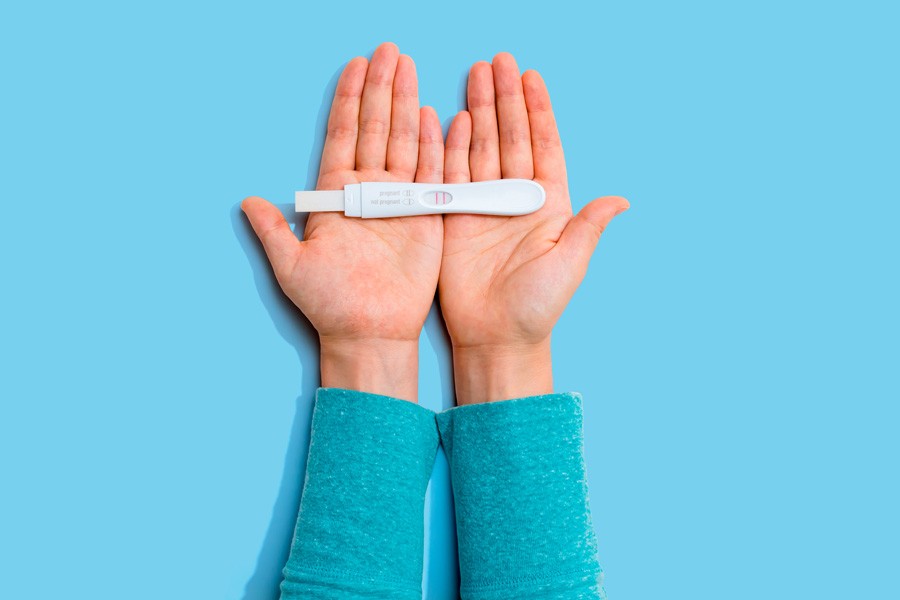
How gestational diabetes can affect your pregnancy
While most women living with gestational diabetes will go on to have perfectly healthy babies [2], in rare instances, complications can occur. These can include [2]:
- Hypoglycaemia, or low blood glucose, in the newborn baby [7]
- Macrosomia, or the baby growing to a larger size than usual, which may cause difficulties during delivery. Midwives and doctors can help if this occurs
- Pre-eclampsia – a condition in the mother that can become serious if left untreated
- Type 2 diabetes later on in life
Although rare, it is important to remember that working closely with your healthcare team is the most effective way of keeping these complications at bay [4].
Gestational diabetes diagnosis and testing
As gestational diabetes may show no symptoms or only very mild ones, an glucose tolerance test is the most reliable way of diagnosing it [2]. This will typically be offered to you at some point during your second trimester, often between the 24th and 28th week of your pregnancy [2].
To find out whether it makes sense to do a glucose tolerance test, you’ll do what is known as a ‘glucose challenge test’ first [2]. To perform the test, you will need to drink a high-glucose drink (for example, water with sugar dissolved in it) on an empty stomach before having a blood sample taken from your arm [2]. Using this sample, a healthcare professional will be able to tell if you need to do a glucose tolerance test that may confirm if you have gestational diabetes. [2].
Management and treatment
While acting quickly is key, gestational diabetes is a treatable condition [4, 5]. In fact, making small changes to your diet will often be enough to help your blood glucose levels return to your target range [2].
The main treatment and management recommendations for gestational diabetes aim to keep blood glucose levels within range. These typically include [2, 4, 5]:
- Special diet and meal plans
- Regular physical activity
- Blood glucose monitoring
- Insulin injections or diabetes medication
Diet and nutrition
Changing your diet can often be enough to stabilise your blood glucose levels [2]. However, you shouldn’t make these changes without talking to your healthcare team first [4, 8].
As each person is different and has varying needs, your team can help you develop a meal plan that works for you and your exact circumstances [4, 8].
While every meal plan will be individualised, generally speaking, your doctor may advise you to [5, 8]:
- Eat more fresh fruit and vegetables [5]
- Be mindful of portion sizes [5]
- Eat more fibre [8]
- Eat fewer carbs or count the amount of carbs you eat [8]
- Avoid high-sugar foods and sweets [8]
- Limit fat and choose low-fat dairy products [5, 8]
Physical activity
Engaging in moderate-intensity physical activity has been shown to help control blood glucose in pregnancy [8].
Moderate activity means doing more than your usual chores, like shopping or doing the dishes, and will include activities like [8]:
- Walking
- Attending prenatal aerobics class
- Swimming
As with your diet, you should always consult your doctor or diabetes care team before engaging in any new physical activity during pregnancy [8].
When it comes to gestational diabetes, early diagnosis and treatment are key [4]. Your healthcare team will offer you screening for gestational diabetes as part of your routine pregnancy care during your second trimester [2].
If you are diagnosed with it, don’t worry – most women living with gestational diabetes go on to have healthy pregnancies and babies [2].
Ask questions, ask for support, and work with your diabetes care team to treat your condition effectively [4, 5]. In most cases, you will only need to make some small lifestyle changes to overcome it [2].
Sources:
- Mirghani Dirar A, Doupis J. Gestational diabetes from A to Z. World J Diabetes. 2017;8(12):489-511. doi:10.4239/wjd.v8.i12.489, https://www.ncbi.nlm.nih.gov/pmc/articles/PMC5740094/
- InformedHealth.org [Internet]. Cologne, Germany: Institute for Quality and Efficiency in Health Care (IQWiG); 2006-. Gestational diabetes: Overview. [Updated 2020 Oct 22]. Available from: https://www.ncbi.nlm.nih.gov/books/NBK293712/
- Solis-Herrera C, Triplitt C, Reasner C, et al. Classification of Diabetes Mellitus. [Updated 2018 Feb 24]. In: Feingold KR, Anawalt B, Blackman MR, et al., editors. Endotext [Internet]. South Dartmouth (MA): MDText.com, Inc.; 2000-. Available from: https://www.ncbi.nlm.nih.gov/books/NBK279119/
- American Diabetes Association (ADA), Gestational diabetes, Accessed 13/10/2023, Available at: https://diabetes.org/about-diabetes/gestational-diabetes
- American Diabetes Association (ADA), How to treat gestational diabetes, Accessed 13/10/2023, Available at: https://diabetes.org/living-with-diabetes/life-stages/gestational-diabetes/how-to-treat-gestational-diabetes
- American Diabetes Association Professional Practice Committee. 15. Management of Diabetes in Pregnancy: Standards of Medical Care in Diabetes-2022. Diabetes Care. 2022;45(Suppl 1):S232-S243. doi:10.2337/dc22-S015
- Quintanilla Rodriguez BS, Mahdy H. Gestational Diabetes. [Updated 2023 Aug 8]. In: StatPearls [Internet]. Treasure Island (FL): StatPearls Publishing; 2023 Jan-. Available from: https://www.ncbi.nlm.nih.gov/books/NBK545196/
- Eunice Kennedy Shriver National Institute of Child Health and Human Development, NIH, DHHS. (2003). Managing Gestational Diabetes: A Patient's Guide to a Healthy Pregnancy (04-2788). Washington, DC: U.S. Government Printing Office. https://www.nichd.nih.gov/sites/default/files/publications/pubs/Documents/managing_gestational_diabetes.pdf